One Second Each Day

I came across this really interesting idea a few years ago–taking a short, one-second long video of each day for a year, and compiling them up and seeing how your year turned out. I tried doing this for 2018, but I unfortunately ran short of storage on my phone.

But this year, I gave into the society-consuming monopoly that is Apple, and bought more storage. I began filming everyday starting January first, and have been consistent everyday since.

And so far, I must say, 2019 has given me many bad days. Many things I don’t want to film. Many breakdowns, stressful nights, and issue upon issue. So, I found that the days I go out with my friends or party much easier to find the perfect second to film, but the days I feel empty are so much harder.

But, some good came out of these empty days. Because yes, things have been hard. Specific days have been huge struggles. But, this little video project essentially forces me to find one good thing about that day. So, I got a scholarship rejection letter. I cried, and then I found a really pretty sunset to look at. I stayed up for hours working on a midterm essay, and I filmed a really cute baby pitbull hanging out the window of someone’s car. Searching for the right ‘second a day’ has given me a reason to look for the good, the magic, the life in everyday.

I also had a tendency to search for ‘perfect’ things to film. My makeup had to be flawless, or it had to be a cool video of all of my friends, or a new, exciting thing that I’m doing everyday. But that’s not EVERYDAY. Everyday is normal things. Colorful pens I organized on my desk, coffee in my car cup holder that I made while I was running late for class, or just normal everyday things that don’t have to be perfect.

So, even if it’s hard to, take a second to find the good part of your day. I promise, it’s worth it.


IMG_0508

Saturday Night Live Museum in Chicago Review: The Highlights

Saturday Night Live has always been quite near and dear to my heart; if there’s one thing I’m a nerd about, it’s this show. So, it was truly fitting that I spent my valentine’s day date at a place I’m newly in love with– the temporary SNL museum in Chicago, ‘SNL: The Experience.’ Located at 360 N State St, you’ll find that the tickets are reasonably priced for the inside look at a show with so much history and humor. Here were a few of my favorite parts.

The Full Schedule

Not only are there famous wigs, costumes, and scripts, but each room of the museum serves as a day of the week at 30 Rockefeller Plaza, and shows how the day-to-day madness ensues. It displays where the episode is at in the production process on each day. For instance, Tuesdays include long nights that writers spend hours thinking of pitch ideas for the dreaded Wednesday meeting with Lorne and the host. The Tuesday room had videos of famous writers, like Seth Meyers, talking about this day in particular, as well as a glass case full of scripts from over the years, included some from as early as the 70’s. I was having a moment. 

ad8HnaeKQjOKy5Dpebu7Xg

The Glamour 

With all the character transformations on snl, it makes for lots of wigs, head molds, and allllllll kinds of props to make the characters look believable. It was interesting to see all the designated elements for the hilarious characters that famous alum used to wear–especially the iconic cone head. 

OJt3O08%RyOoX9B50ATvYwHYh+hYNFRRStnYMHxx82qw.jpg

The Costumes

We were joined by all of the classics from snl history at this museum, Stefon’s wedding outfit (YES!), the church lady’s dress (isn’t that special?), and even the suit from Alec Baldwin’s uncanny Donald Trump impersonation. There were so many more that you should check out for yourself because this part of the museum was surreal. I felt like I was entering a forbidden Taiwanese Temple or something. Seriously, it was so cool.

BPYdOWqyQ466f2wRSAJYWw

The final part

After visiting a replica of the control room (which also felt very real, there was a countdown board to the special snl episode for museum goers only.) The nutshell SNL episode was short and sweet to sum up the museum, and to send off those just finishing the tour. There were very few other people there when I went on a weekday, so it made this experience even cooler. After the mini show, they encouraged a fun photoshoot behind the recreated ‘weekend update’ desk. I was in heaven. (And I also found my new profile picture for EVERYTHING)

fullsizeoutput_3162fullsizeoutput_3161

This was by far, the best museum I have ever visited. I only mentioned a fraction of the memorabilia, props, costumes, quotes, videos, set pieces, and snl artifacts that caught my eye on every floor; there are so many more I didn’t mention. It’s funny because we were actually about to do the art institute for the 288343476th time. Luckily, my search recommended this gem, and suddenly there was a day I’ll never forget. In other words, DO THIS WHILE IT’S HERE!


Comedians that Dominated their Decade 1920’s-now

Related image

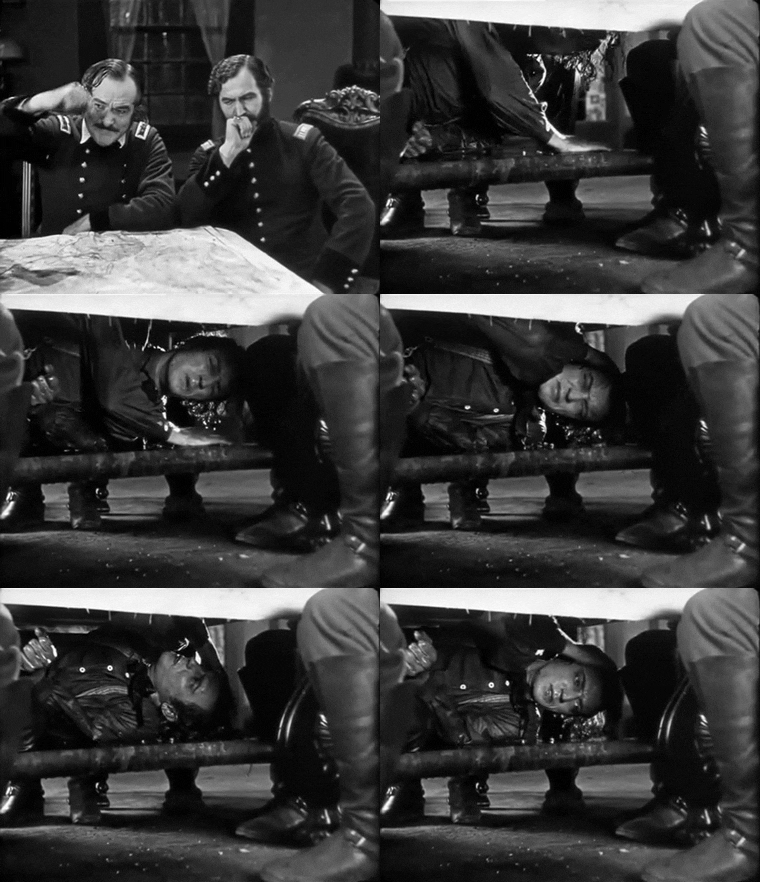
1920’s : Buster Keaton: Known for his physical, slapstick antics, Buster Keaton was the ‘stone-face’ of comedy in the new platform of film. He’s famous for seemingly impossible gags, establishing a new territory of comedy in his era. You can’t take a film class without hearing his name. He’s known for his feature films like The General and Steamboat Bill Jr.

Related image

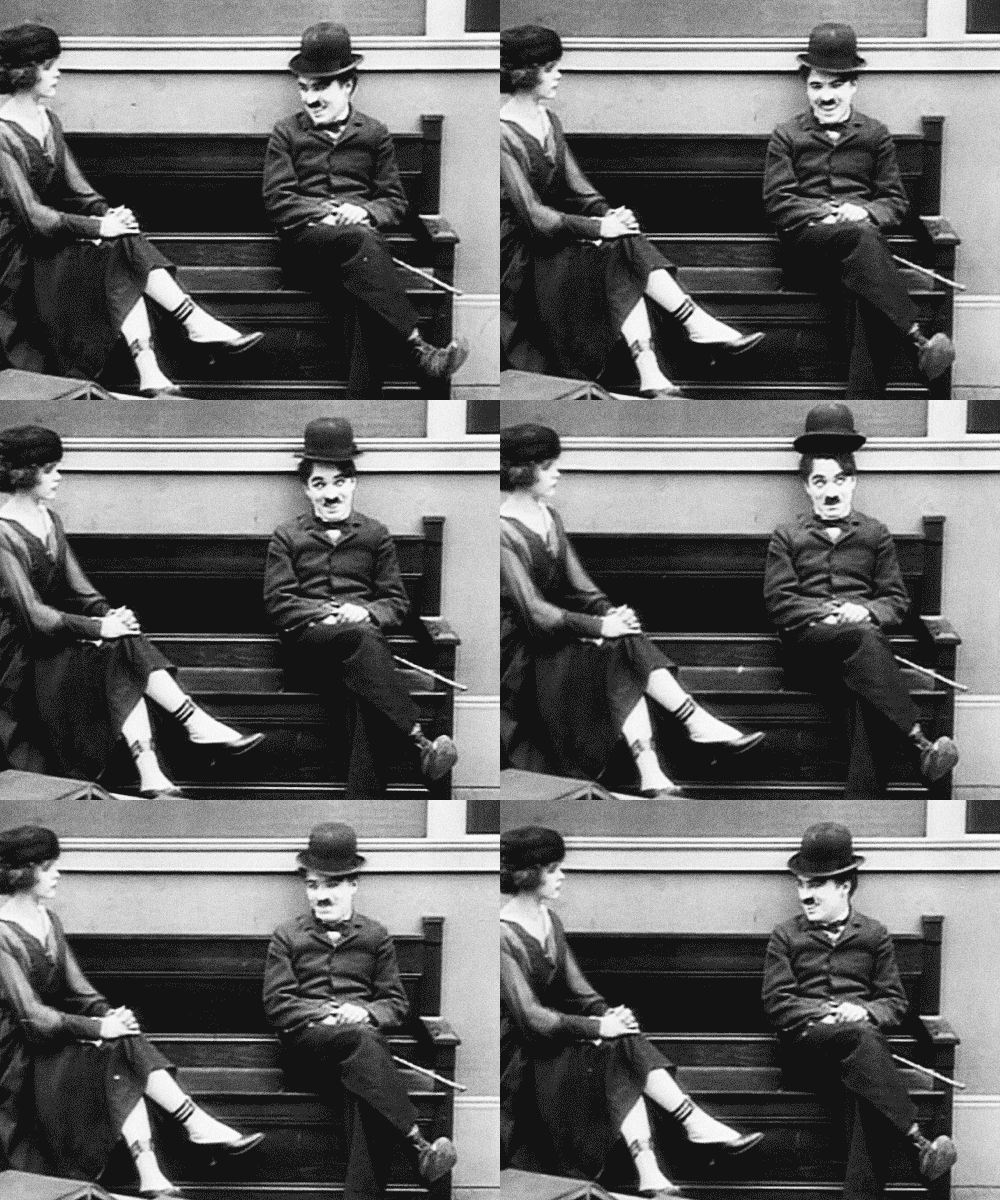
1930’s: Charlie Chaplin: Relying heavily on pantomime and eccentric, quirky movements to convey humor, Chaplin paved the way for experimental techniques in comedy films. He’s known for his works like Modern Times, and The Great Dictator. (Side-note: he’s also infamous for his scandalous life outside of film.)

Image result for bing crosby gif

1940’s: Bing Crosby: Known for his life in comedy motion pictures, as well as music, Crosby took the entertainment industry by storm in his era. He’s known for many comedic films like Going My Way and Road to Bali, especially when he was starring on the silver screen with classic comedian, Bob Hope.

Image result for jerry lewis gif

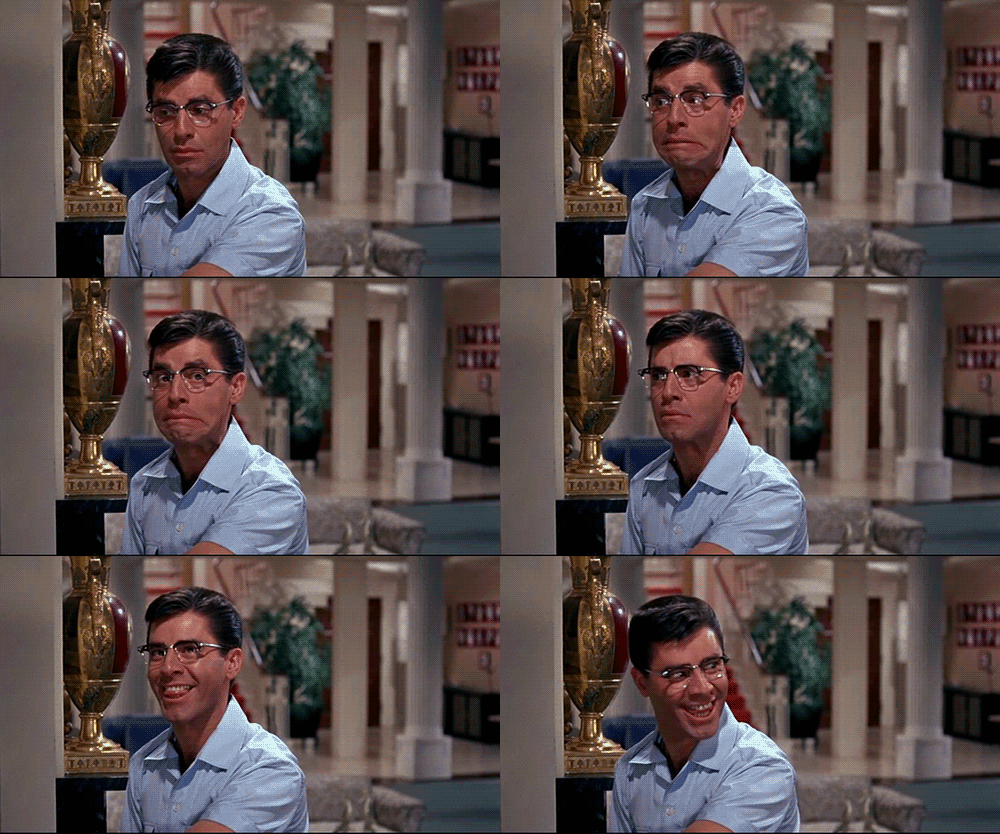
1950’s: Jerry Lewis: As the Paramount comedy star, and former duo member with Dean Martin, Lewis was a thriving entertainer of the 1950’s and beyond. Creating and starring in a plethora of comedy films, as well as being known for his quick improvisational humor on The Martin and Lewis Show on the radio, Lewis seemed unstoppable in his career endeavors. He went on to pursue a solo career, and later directed many films like The Bellboy and The Ladies Man.

Image result for young joan rivers gif

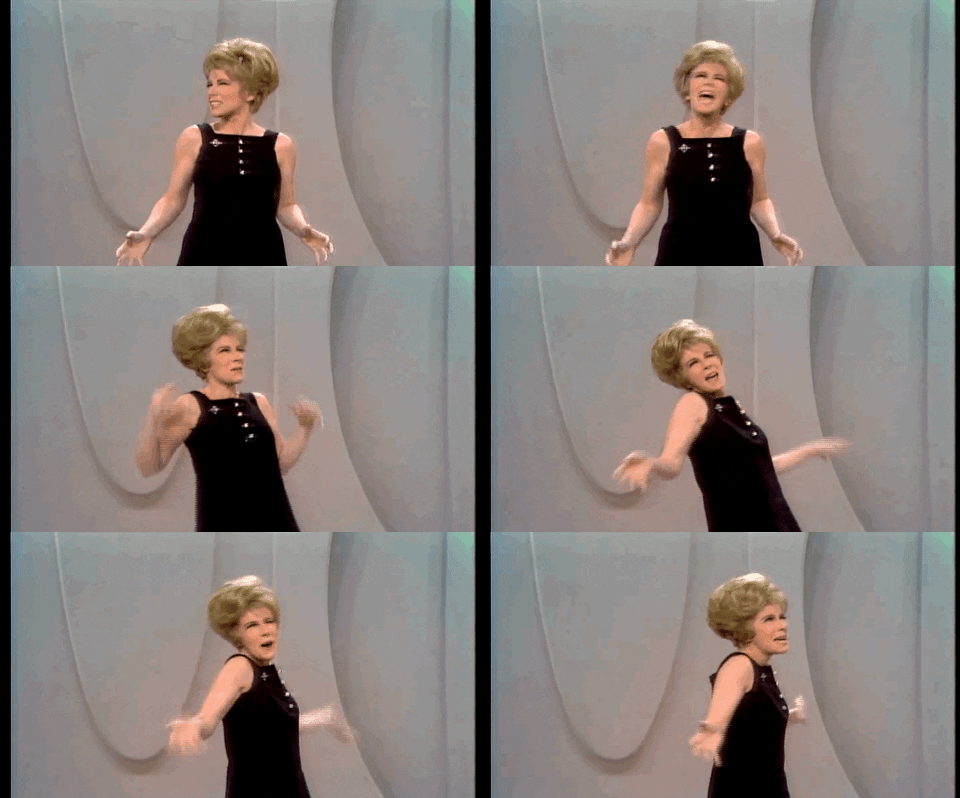
1960’s Joan Rivers: One of, or if not the most famous female comedian of all time, Joan Rivers was outspoken, fearless, and hilarious in her glory days of comedy. She pioneered comedy for females, as she was the first female late night television host and paved the way for stand up, igniting laughter with shocking comedy, insults, and witty observation.

Image result for rodney dangerfield gif dancing

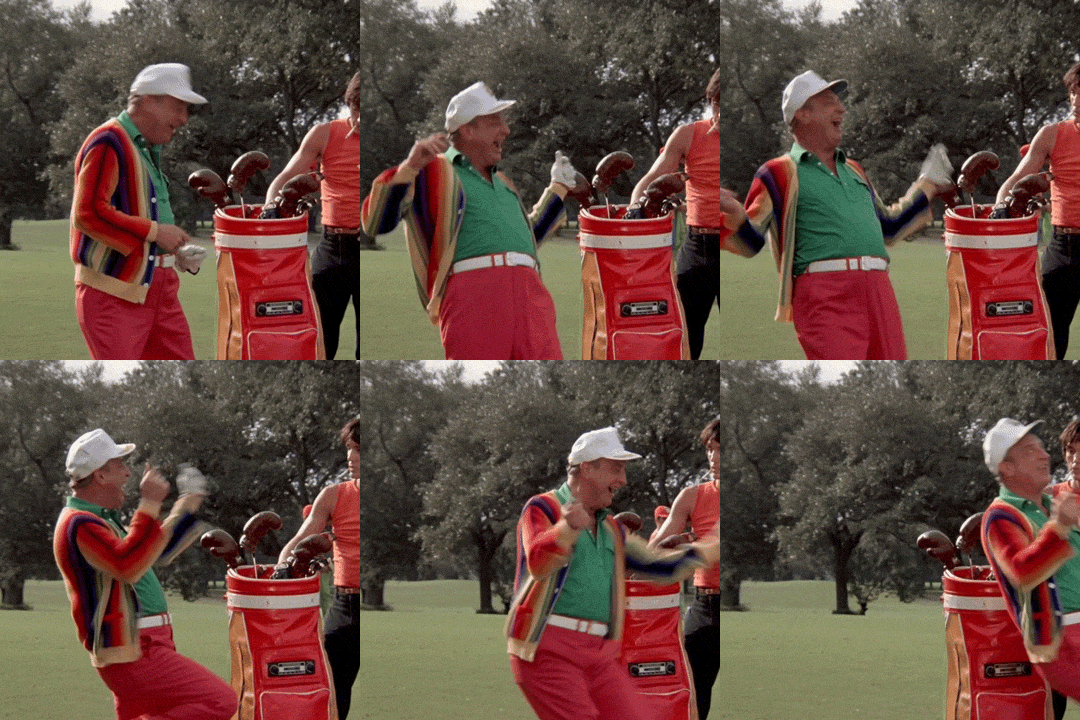
1970’s Rodney Dangerfield: Known as one of the greatest names in comedy, Dangerfield has mastered film, stand up, and simply being a hilarious person all around. If you’ve ever heard the phrase ‘I don’t get no respect!,’ you know who to thank. With stand up specials, No Respect and Back to School, and classic comedy films like Caddyshack and Easy Money, and hundreds of witty one-liners, it’s easy to see how Dangerfield rose to the top.

Image result for robin williams gif

1980’s: Robin Williams: Ah, the man himself, whom we all miss dearly. Williams’ comedic talents of improvisation, mastering impressions and voices, televised comedy and classic comedy films, is famously loved by many. Appealing to practically any audience, his legacy of comedy wins him a place as one of the greatest. Need there be a further explanation? 

Image result for jerry seinfeld gif

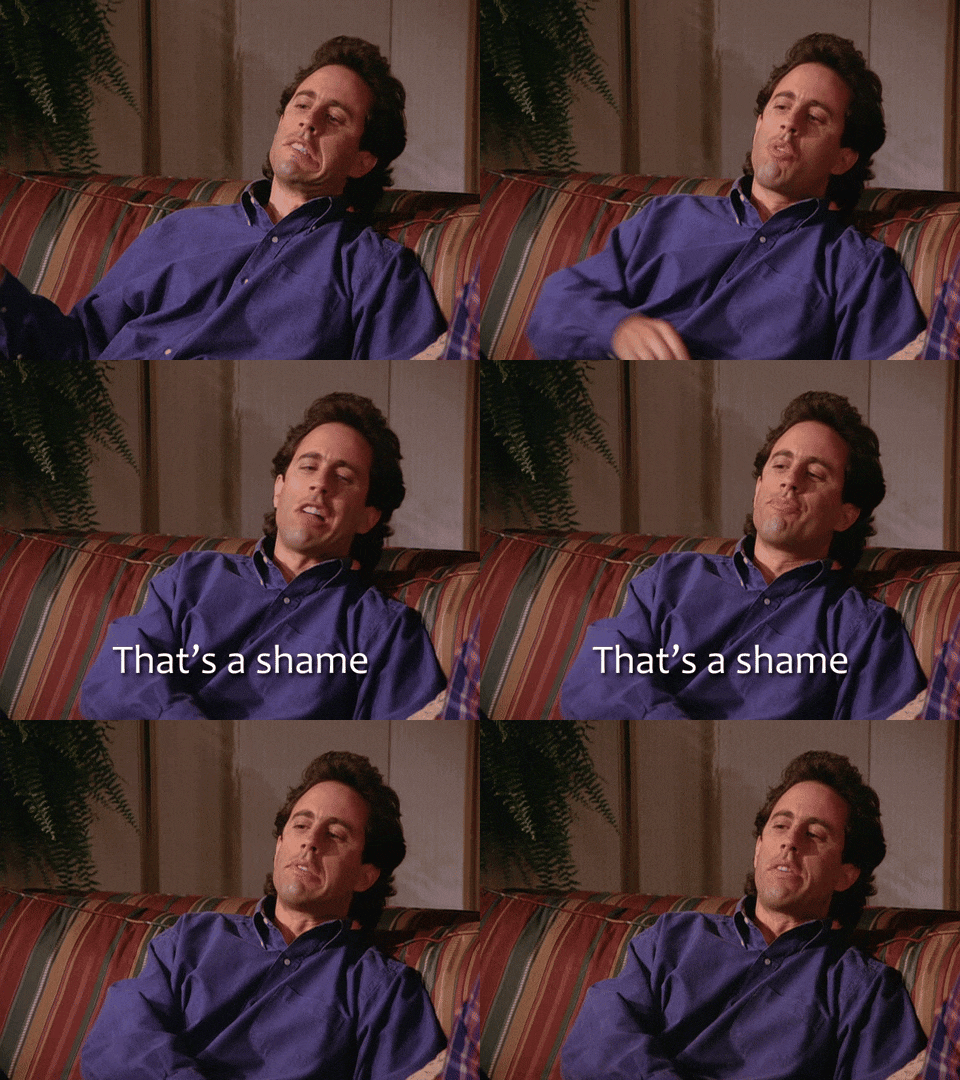
1990’s: Jerry Seinfeld: What is the deal with him? Inventing the best of sitcom comedy, Jerry Seinfeld is quite literally known as the ‘king of comedy’ by many. Exuding confidence, wit, and an expertise knowledge of humor, he’s the creator of one of the most famous, long-running comedy series. His stand-up specials and screenwriting skills have made him one of the biggest names in comedy. 

Related image

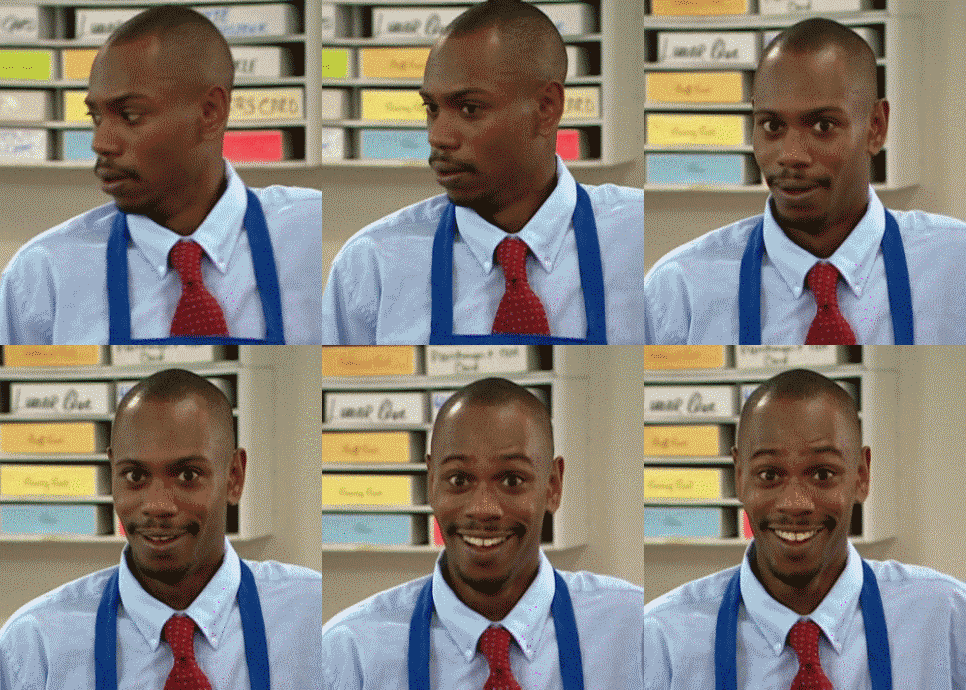
2000’s: Dave Chappelle: Relaxed, philosophical, clever and brilliantly hilarious–Chappelle takes on broad topics in stand up from politics to sex and drugs, and many more. Creating the Chappelle Show, Half-Baked, and The Dave Chappelle Project as well as hilarious stand-up specials like For What It’s Worth, and Killin’ Them Softly. He’s known by many as one of the greatest names in the history of comedy.

Related image

2010’s: John Mulaney: Taking the comedy scene by storm, Mulaney has created three successful stand-up specials (New in Town, The Comeback Kid, and Kid Gorgeous) undertook years writing for SNL, and co-created a new type of cartoon comedy on TV animation, Big Mouth. His aura of gentle, story-telling politeness is part of what ropes each audience in to roaring laughter. His talent in sketch comedy, self-deprecating nature, and surreal humor, are all what make him one of the current top names in comedy today.


How American Psycho Charms its Audience with Dark Themes and A Puzzling Truth

Recently, I had to review a film for my composition class. I wanted to pick a film that actually got me thinking and entertained dark, thrilling elements. With halloween coming up, I thought–what better movie to pick than our favorite businessman killer, our American psycho?

American Psycho (2000), was  directed by Mary Harron and based on a top-selling novel written by Bret Easton Ellis in 1991. This film is about a young, sophisticated businessman–Patrick Bateman–living in New York in the late 80’s. However, he’s an uncontrollable and horrendous serial killer when nighttime hits. The film has running themes of self-identity, isolation, illusion and insanity, all of which contribute to its dark, horrific elements.

Self-identity and distortion are recurring themes in this film. Patrick seems to be living as two identities. We first have his social identity: businessman, agreeably uninteresting and undistinguishable from his co-workers. Then there’s his psychotic, night-time, killer identity that has no remorse. Because he’s one person, understanding which identity he is at certain points in the film can seem confusing. Cinematography works as a guide for the audience to see which “person” he is.

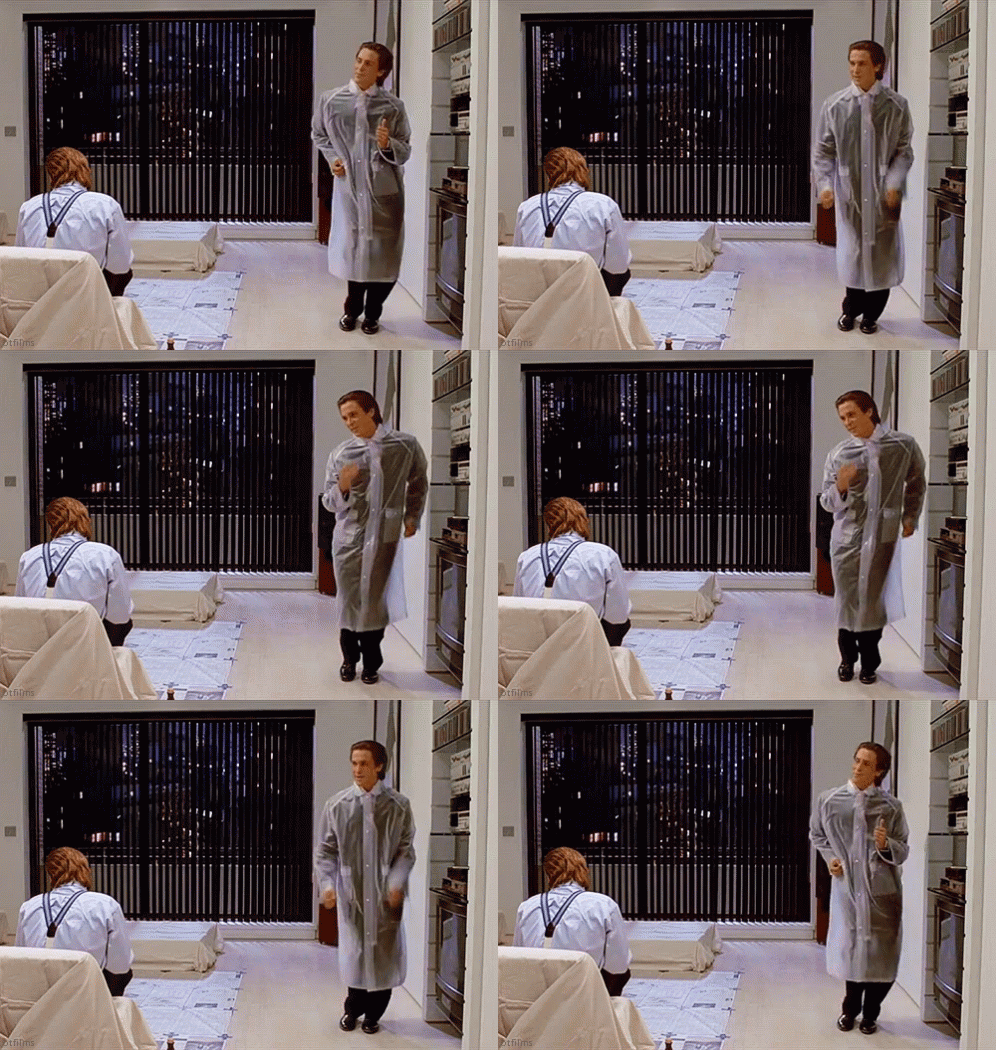
For example, the consistent shots of Bateman’s reflection in mirrors shows that he’s aware of his other identity. He wears Valentino business suits as a symbol of his social identity. While he’s murdering his co-worker, Paul Allen, he puts on a transparent raincoat, veiling the view of his pristine business suit. This represents his social personality being blocked, or pushed aside as his murderous, malicious side steps forward.
There is a shot of the ‘Les Mis’ French flag casted over Bateman’s face. This shot is exactly half-lit; one side of his face is perfectly illuminated, the other cast with a dark shadow. This can be seen as a symbol of his bipolar, dual nature with one side, bright and charming while the other, villainous side hides in the darkness.

The concept of masks as a symbol consistently shows up in Bateman’s life. In his opening monologue, he applies a face mask and slowly peels it off. This represents how he “puts on a mask” before he goes out into the world and interacts with people–his evil side is hiding under his social identity. Then there are scenes where Bateman’s face is covered with blood, looking as if it is a mask; this is representative of his evil persona blocking, or masking his sane, social identity. He is constantly masking his true identity to match whatever situation he’s in.

If a tree falls in a forest when no one is there, does it make a sound?

This philosophy can be specified in context to: if you confess to murdering forty people and nobody believes you, does it even matter? The lack of self identity is displayed in Bateman’s social interactions with his peers and fiance. His coworkers seem confusedly interchangeable to one another.

“There is an idea of a Patrick Bateman, some kind of abstraction. But there is no real me. Only an entity. Something illusory,” Bateman declares.

But no one appears to care. Worse yet, no one even notices. Bateman confesses to these peers multiple times to the murders he committed. Each person either laughs it off or pretends not to hear, giving way to the storm of frustration and insanity heightening in his narrative.

Bateman’s hysterical confession to his lawyer on the phone is quite possibly the loudest shout for help he could give.

Howard, it’s Bateman. Patrick Bateman. You’re my lawyer, so I think you should know I’ve killed a lot of people.”

He goes on to confess, in detail, to every murder he committed. In response, his lawyer simply laughs, mistakes him for a different client and praises him on pulling “such a funny joke on that loser Patrick Bateman.” The lack of distinguishability between the individual worth or traits of the characters in their uptight, high-class society is what drives Bateman to become a murderer. In his world of isolation and no discernible identity, murder is his insanity-driven way to differentiate himself from the rest.

Lastly, as an audience, it’s vital to unpack the idea of a false narrative, or being misled through the actual timeline of events. Distortion, insanity, self-identity are all themes that heavily rely on the musings and broken gears of Patrick Bateman’s mind. This leaves us with the question: were all of his murders just a product of his mind as well? Did he just imagine each kill and leave the audience to believe it actually happened?

Americanpsychoblood

During the movie, there are a few compelling examples that serve as evidence for this false narrative. For example, after Bateman’s killing spree, he visits the apartment in which he stored the “evidence” of his murders.  This is when everything we understood to be true of Bateman’s narrative starts to unwind. The evidence is completely wiped from the apartment; painted over without a trace. He runs into a realtor; she states that nobody named “Paul Allen” actually lived there. Near the end of the film, Patrick is told by his lawyer that he couldn’t have committed the murder of Allen, because he went out to dinner with a different coworker, Paul Owen, the prior week.

Essentially, American Psycho has elements of isolation, insanity, and self-identity that seem to falsely lead the audience through an incorrect timeline of events told by a bipolar, psychotic narrator. These elements also serve to satirize the upper-working class of late-80’s New York “yuppies”, so to speak. Although the perplexing plot line has led people to argue about its truth, the original author, Ellis, has said that the greatness of the story is exactly that we do not know whether or not Bateman committed the crimes.

As an audience, we’re left to wonder if the his insanity led us through a false, blurry narrative, or if he recounted everything exactly as it happened, but no one cared.


creditcardplate

Blog at WordPress.com.

Up ↑

Design a site like this with WordPress.com
Get started